Shivani
September 1, 2026
Workspaces and Computer Controls: NonBioS for Portfolio Hackers
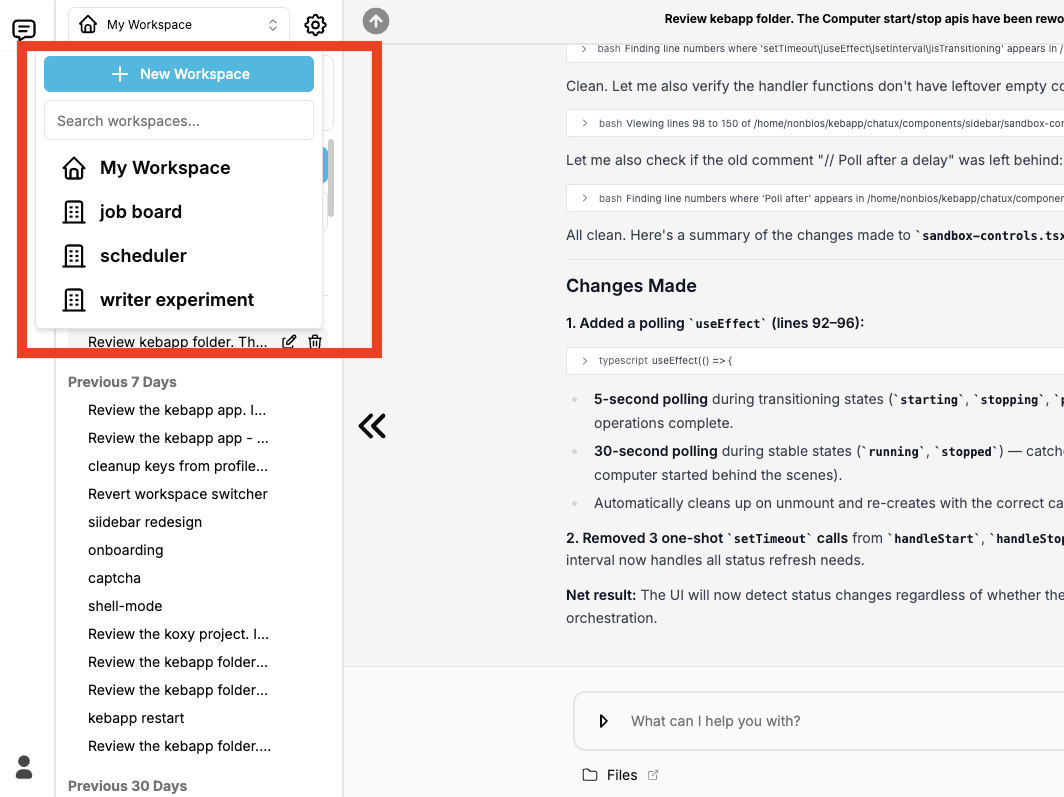
Two shipped features: multiple workspaces, one per project - and a real power switch for your computer.


In this tutorial, you'll learn how to connect NonBios to your cloud virtual machine.
Author:
Published:
Updated:

In this tutorial, you'll learn how to connect NonBios to your cloud virtual machine. This approach works with any cloud provider, including AWS, Azure, Google Cloud, or corporate cloud environments. By running NonBios operations on your own VM, you maintain better security since your code and data stay within your infrastructure.
The connection process involves two main steps:
Step 1: Understanding and Activating Shell Mode
NonBios operates within a Linux sandbox environment. While this sandbox is typically only accessible to NonBios, we can interact with it directly using Shell Mode.
To activate Shell Mode:
shell-models to verify you're operating in the sandboxImportant Note: Shell Mode only supports non-interactive commands
Step 2: Connecting to Your VM
Since Shell Mode doesn't support interactive commands, we'll use sshpass to establish our connection. sshpass allows us to provide login credentials as command-line arguments, making the process non-interactive.
Here's how to connect:
Use the following command structure:
sshpass -p [your-password] ssh [username]@[vm-address]
For example:
sshpass -p password123 ssh amit@[your-vm-address]
1. Wait approximately 10-15 seconds for the connection to establish
2. You'll see the Ubuntu welcome screen when connected
Verifying the Connection
To confirm you're connected to the remote system:
ip addrSwitching Between Modes
shell-mode againTesting the Connection
Let's verify everything works:
Remember: Always secure your VM credentials and follow your organization's security policies when establishing remote connections.
Quick signup, give NonBioS a high-level instruction, see progress within minutes. Your first multi-hour session is on the house.
No Credit Card Required