Shivani
September 1, 2026
Workspaces and Computer Controls: NonBioS for Portfolio Hackers
Two shipped features: multiple workspaces, one per project - and a real power switch for your computer.


We’ve made a number of changes to NonBioS pricing and infrastructure. Some of them came directly from user requests. Others came from lessons we learned operating the platform at scale - including dealing with everything from botnets and phishing attempts to cryptocurrency mining. The result is a pricing model that gives legitimate users more room to build before they need to pay, while giving paid users clearer reasons to move up as their projects - and their trust in autonomous development - grow.
Author:
Published:
Updated:
Free projects now stick around longer
Previously, every NonBioS user received essentially the same Computer:
- 4 GB RAM
- 2 vCPU
- Public IP
The main difference between Free and paid plans was persistence. Free Computers were deleted after 3 days of inactivity. Paid Computers stayed around indefinitely for as long as the subscription remained active. That worked, but three days turned out to be too short for many people.
Users often wanted to experiment with an idea, come back a few days later, continue building, and only then decide whether the project was worth keeping online permanently. So we’ve changed the Free tier.
Free users still get a Temporary Computer, but your files now remain available for up to 7 days of inactivity. The Computer may stop after a period of inactivity, but you can restart it simply by initiating another chat. If you return within seven days, your project is still there.
This gives you substantially more time to build, test, leave a project alone, think about it, and come back - without having to subscribe just to keep your work around.
NonBioS is not just an AI interface sitting on top of somebody else’s hosted project environment.
The idea behind the product has always been simple: An AI Software Dev with its own Computer.
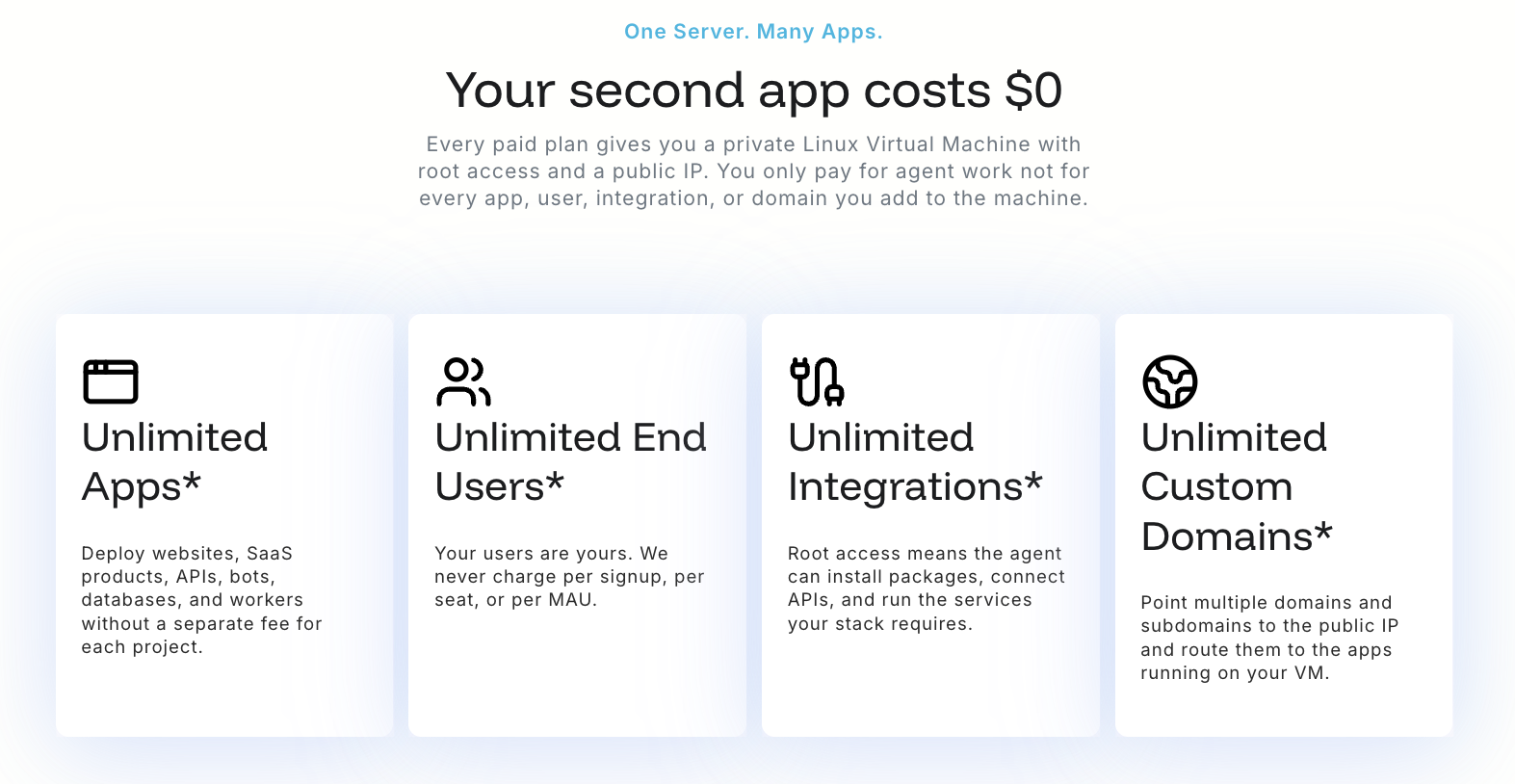
That Computer becomes more capable as you move into higher plans. Higher tiers can provide additional RAM, CPU, disk capacity, and longer autonomy horizons for projects that need them. And because it is your Computer, you are not paying for another isolated hosted project every time you build another app.
You can run multiple applications, integrations, databases, APIs, workers, and domains on the same machine, subject to the actual resources available on that Computer. That architecture is also why the economics of NonBioS look different from many hosted app builders.
These changes weren’t only about making the product more flexible. Running general-purpose Computers for autonomous AI agents comes with a less glamorous operational reality: people will try to abuse them.
We have seen a remarkable range of it: Botnets. Phishing infrastructure. Cryptocurrency mining. Automated account abuse. And plenty of other workloads that have absolutely nothing to do with building software. That abuse has had a meaningful impact on our operations.
We never wanted the answer to be simply making the Free tier less useful for everyone else. Instead, we’ve been working on better ways to identify and contain abusive workloads while giving real builders more freedom. The new Temporary Computer model is part of that balance.
Legitimate users get more time, not less: projects now stick around for seven days of inactivity instead of three. At the same time, infrastructure that isn’t being actively used doesn’t need to remain online indefinitely. It is a better fit for how people actually experiment with NonBioS, and a more sustainable model for us to operate.
The other major change came from one of the most common requests we’ve received: let NonBioS work for longer on its own.
NonBioS is designed to work autonomously, but autonomy needs sensible boundaries. Today, while working on a task, NonBioS can complete a large predefined number of autonomous steps before it automatically pauses and waits for you to review what it has done. You can then inspect the work, give feedback, or simply tell it to continue. That pause is deliberate.
When someone is new to autonomous development, having regular review points is useful. You can see how NonBioS approaches problems, understand the changes it is making, and build confidence in letting it work independently.
But something interesting happens over time. People who have used NonBioS for a while tend to want fewer interruptions. Once you are comfortable with how it works, you often want to hand it a larger task and let it keep going. That is what Long Horizon Autonomy is for.
Higher plans now increase the number of autonomous steps NonBioS can take before the automatic review pause. So as you move up the plans, NonBioS can work through progressively longer and more complex sequences of work without waiting for you to intervene. The progression is intentional. Start with shorter autonomous runs. Review frequently. Build trust. Then, when you are ready, give your AI Software Dev a longer horizon.
Credits are not changing
One thing that isn’t changing is how credits work. Credits continue to measure active agent work. They are consumed while NonBioS is actively processing a task - not while you are reading code, reviewing changes, thinking about what to do next, or simply leaving an application running.
Premium Agents continue to consume credits faster than Standard Agents. And once plan credits are exhausted, Daily Credits continue to let you keep working. So although the Computers and autonomy limits are changing, the underlying credit system remains the same.
A better progression from idea to production
The goal of these changes is to make the plans correspond more closely to the way people actually use NonBioS.
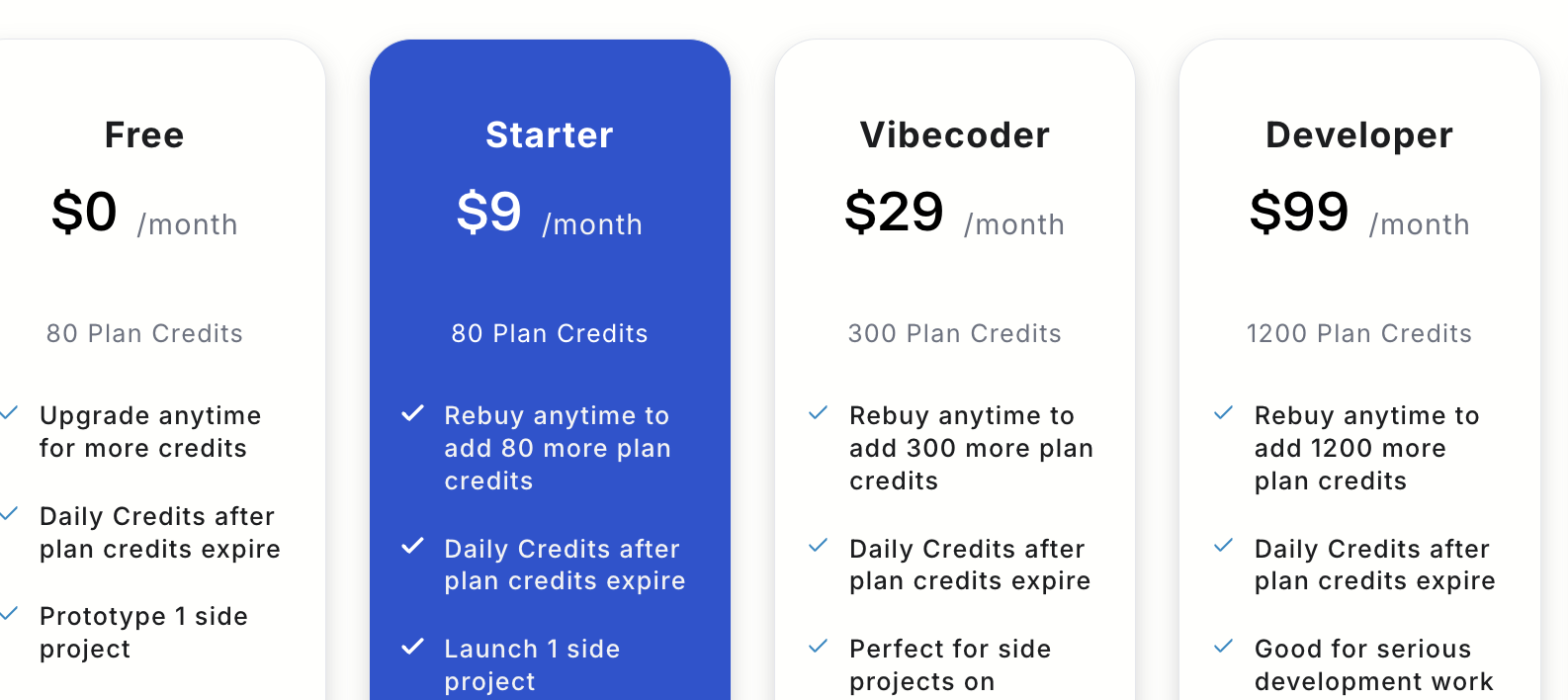
Free: gives you room to explore an idea without immediately committing. Your project can now survive seven days of inactivity.
Starter: gives your AI Software Dev a Permanent Computer so the things you publish can stay online.
Higher plans give NonBioS more resources and increasingly longer autonomy horizons as your projects become more demanding and you become more comfortable letting it work independently.
We think this creates a much more natural path:
Experiment → publish → delegate more → build bigger.
And importantly, it lets us offer a more useful Free tier while continuing to protect the platform from the kinds of abuse that come with providing real compute to autonomous agents.
We’ve learned a lot from watching how people use NonBioS, and many of these changes came directly from that feedback.
Quick signup, give NonBioS a high-level instruction, see progress within minutes. Your first multi-hour session is on the house.
No Credit Card Required